About Us
Message from the Director
The Material Cycles Division is dedicated to advancing a society that makes effective use of finite resources while achieving both the creation of diverse forms of value and the reduction of environmental burdens, by taking a comprehensive view of the entire life cycle of resources—from extraction and use to reuse and final disposal. In modern society, vast amounts of energy and materials are introduced to support society in the form of products, services, and infrastructure. While some of these materials are circulated and reused through recycling and other forms of resource recovery, many ultimately become waste. This social metabolism of materials is accompanied by a wide range of environmental impacts, in addition to resource consumption.
In this division, we promote research and development that contributes to addressing these challenges from both institutional and technological perspectives by comprehensively identifying the environmental impacts that arise throughout the resource life cycle and systematically clarifying the structure of the underlying issues. In particular, we seek to make the most of the distinctive strengths of our researchers: the capacity to understand society as an integrated system, the ability to develop foundational technologies for recycling and waste treatment, and the expertise to accurately monitor and measure chemicals in the environment. Through these efforts, we aim to contribute to the realization of a sound material-cycle society. In addition to a macro perspective that takes an overarching view of society as a whole, we also value a micro perspective rooted in local communities and in the on-the-ground realities of diverse stakeholders. By accumulating knowledge through dialogue and collaboration in the field in response to specific issues arising under different constraints and value systems, we seek to generalize these insights and connect them to practical social implementation.
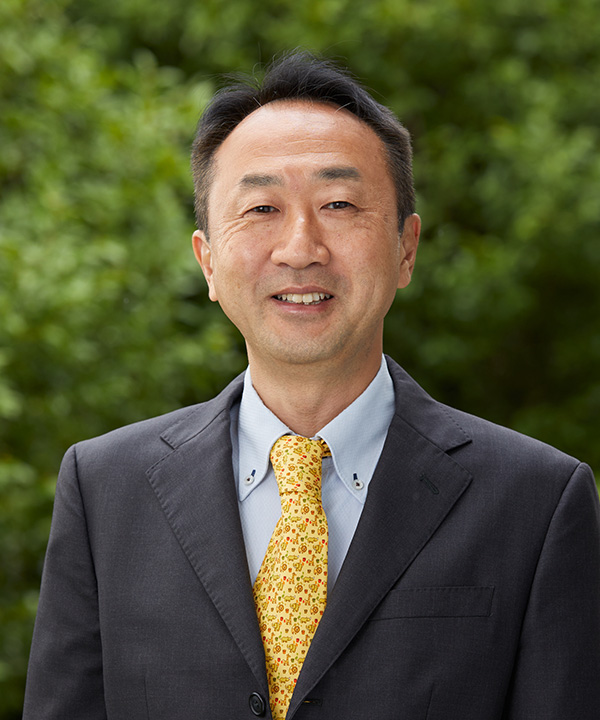
Keisuke Nansai,
Director, Material Cycles Division, NIES
Source:
https://www.nies.go.jp/en/about/organization/cycle.html
Overview
The Material Cycle Research Domain advances an integrated program of research from three perspectives: systems research, risk assessment, and technology development. Its work includes the analysis of material cycle systems, the evaluation of the resource value and hazardous properties of materials, and the planning and development of waste treatment and disposal technologies. Through these efforts, the Domain supports the formulation and implementation of material cycle and waste management policies.
As a project-based research program, the Domain conducts “Overcoming Barriers to Enhancing Material Cycles for Decarbonization” This project addresses institutional design for material circulation, the development of innovative technologies, and the optimization of technological systems. Policy-oriented research focuses on the mechanisms of material circulation and waste management, the resource value and hazardousness of materials in circulation, and policy issues related to waste treatment and disposal technologies.
Through these activities, the Domain generates scientific knowledge that helps solve urgent challenges already evident in waste management and material circulation policy, while also preventing future problems before they emerge. In doing so, it contributes to the maintenance and transformation of sustainable systems and returns research outcomes to society. In addition, as part of its intellectual infrastructure development, the Domain promotes the development of a circular economy platform aimed at dramatically improving material efficiency and supporting sound societal transformation.
History
| January 1938 |
|
|---|---|
| March 1974 |
|
| July 1990 |
|
| April 1992 |
|
| January 2001 |
|
| April 2001 |
|
| April 2011 |
|
| April 2021 |
|